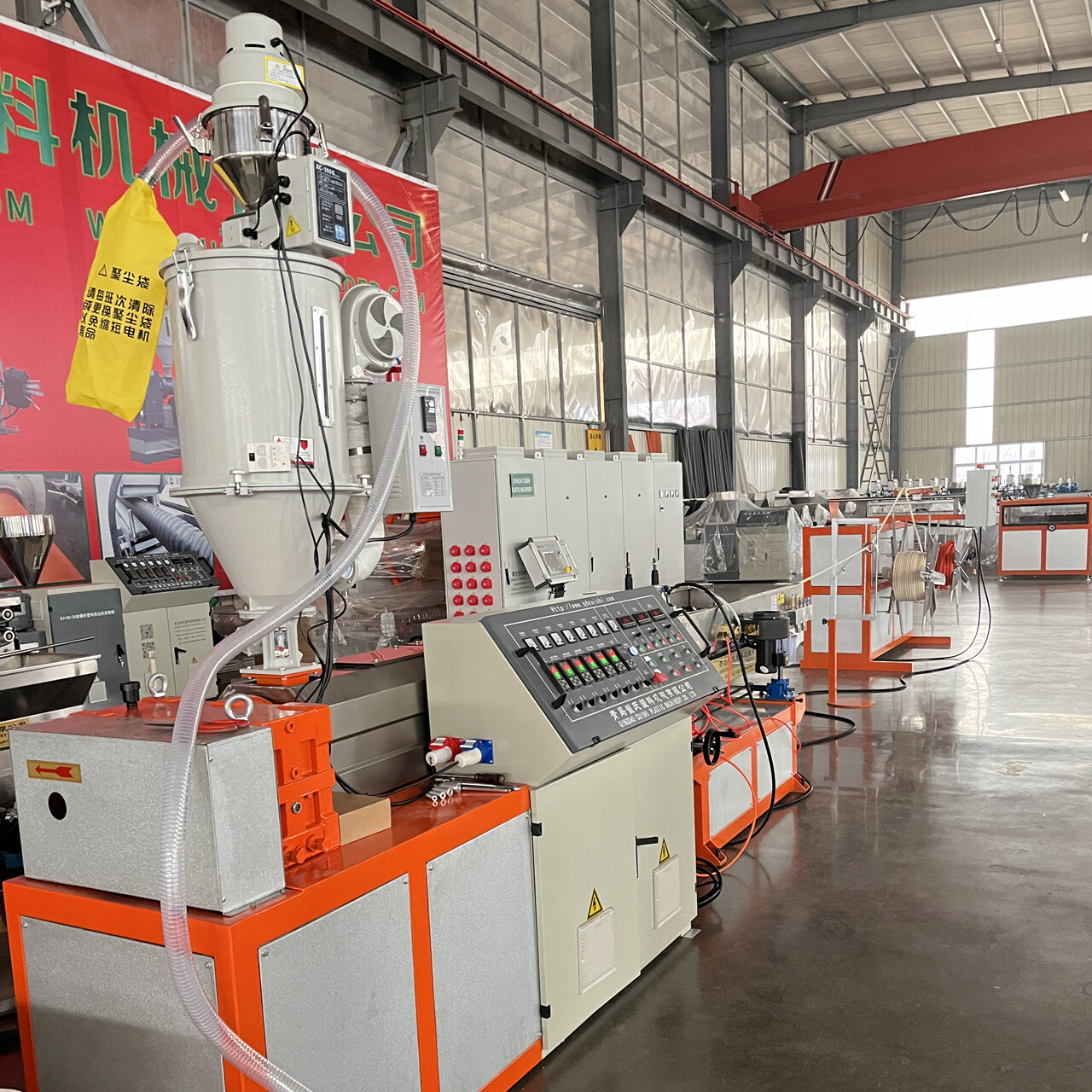
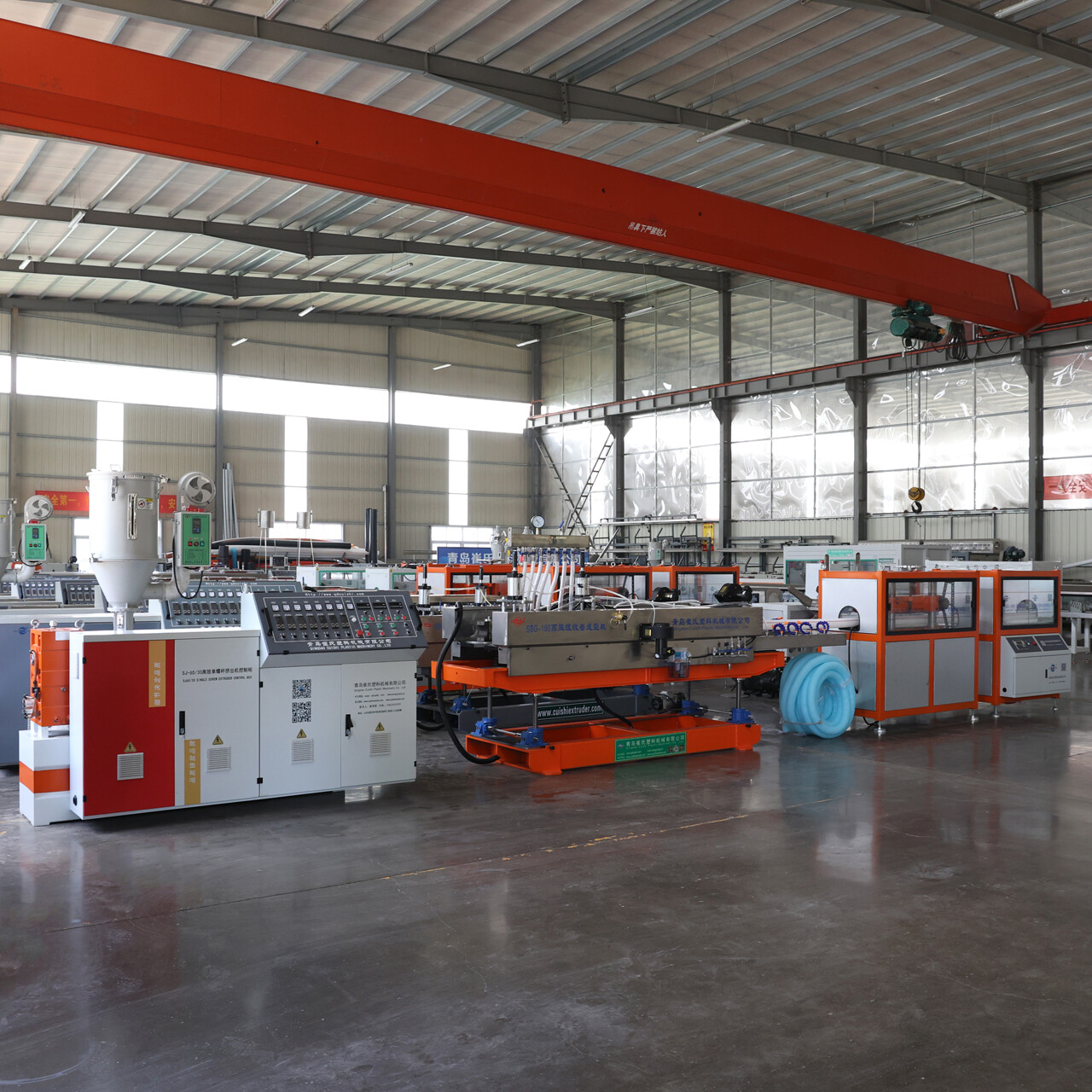
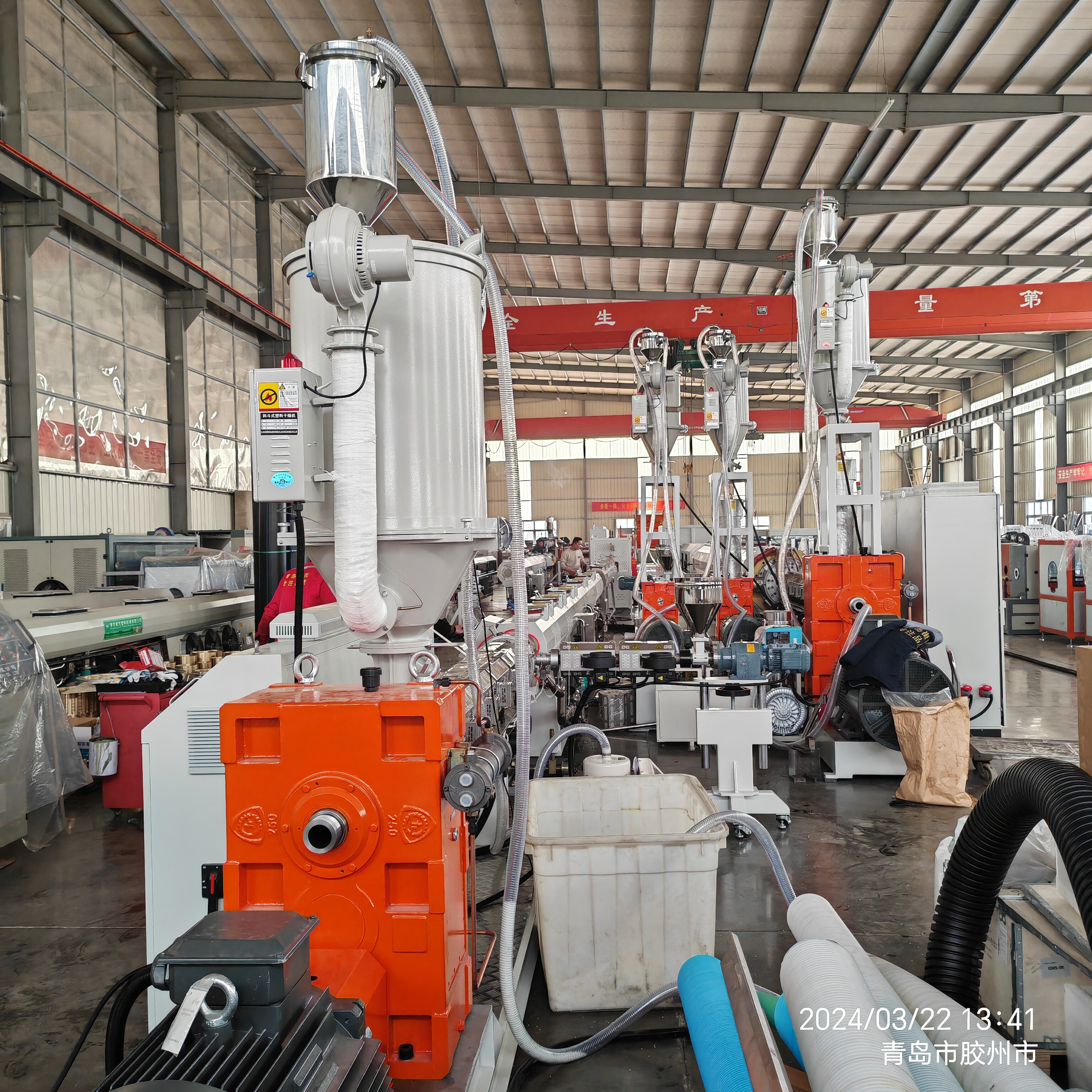
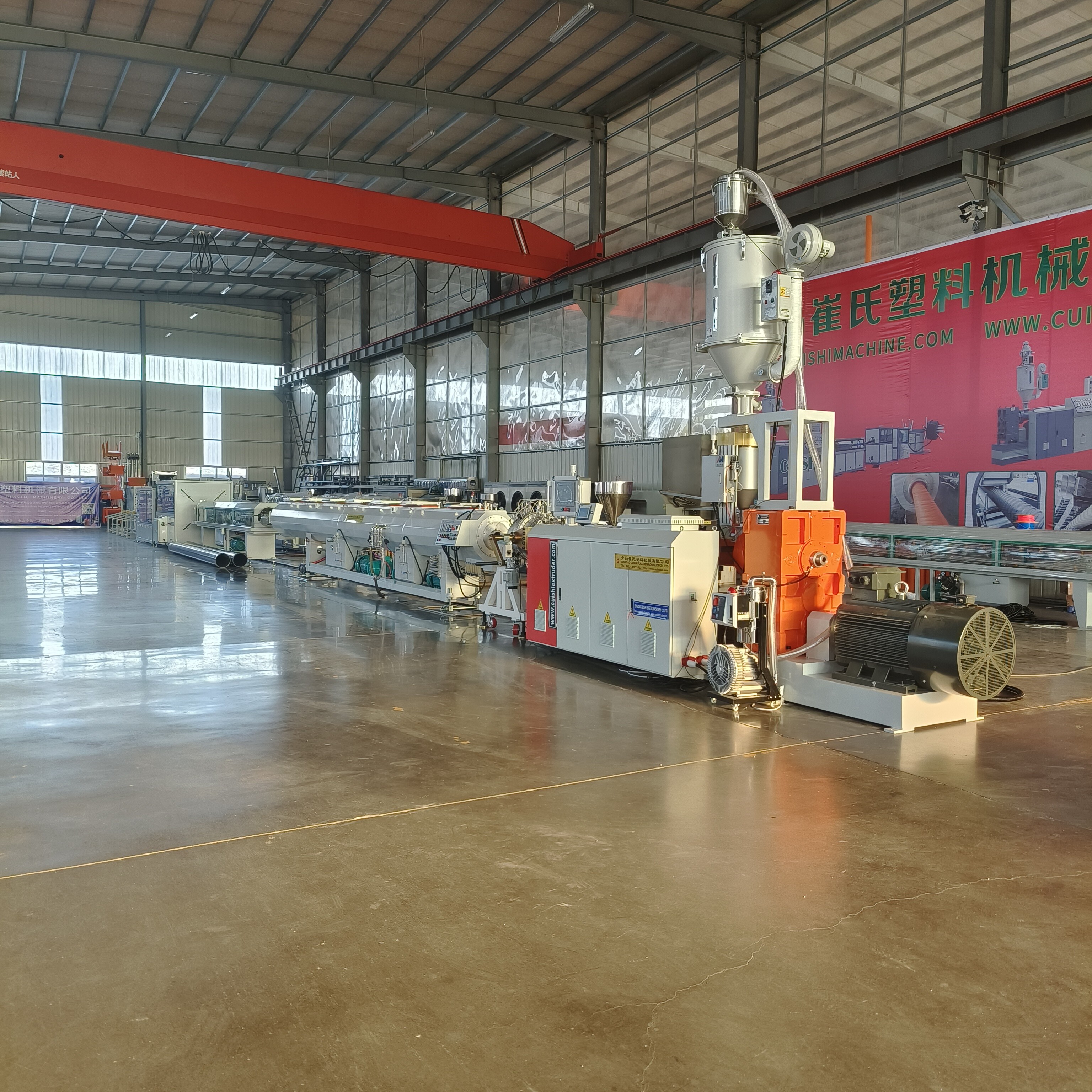
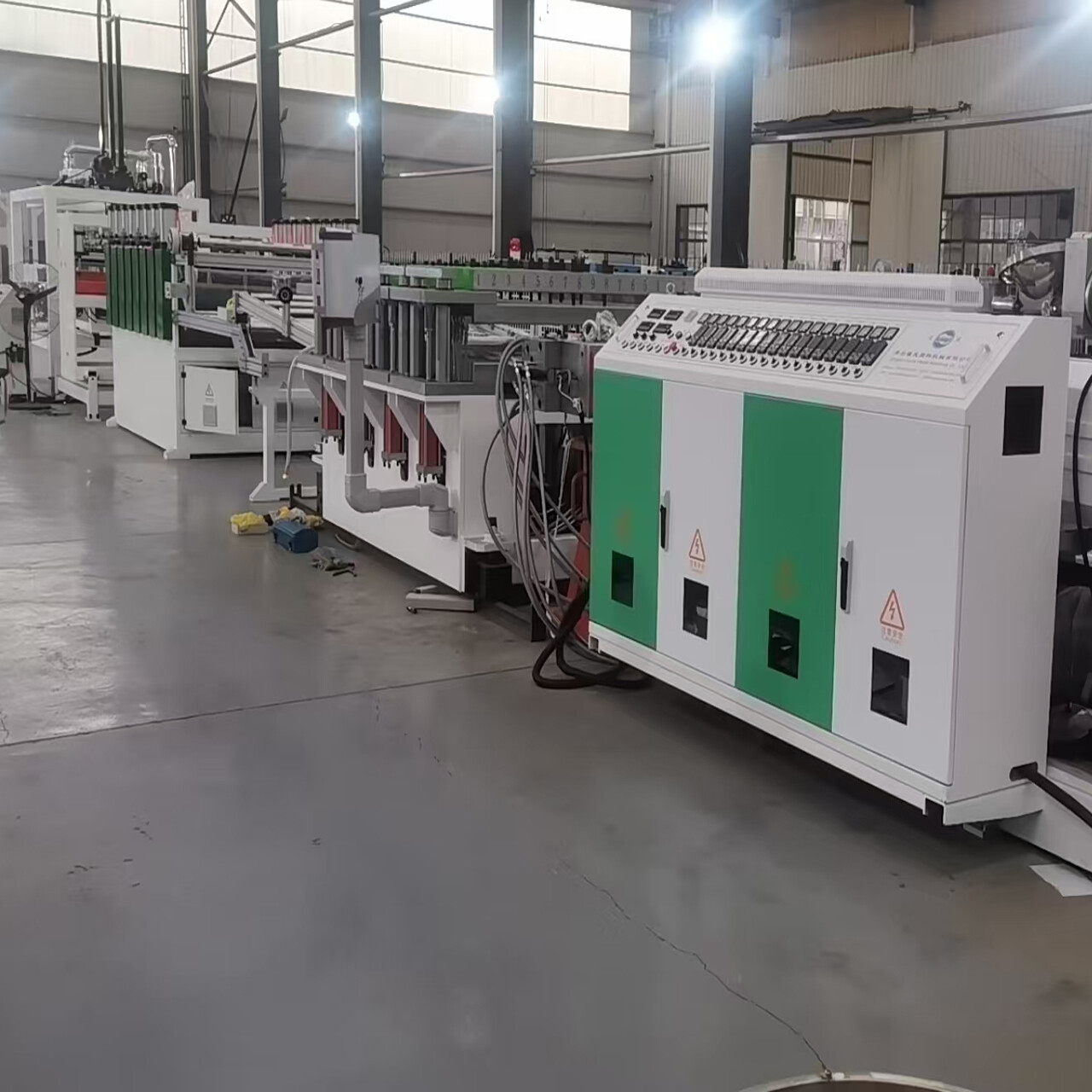
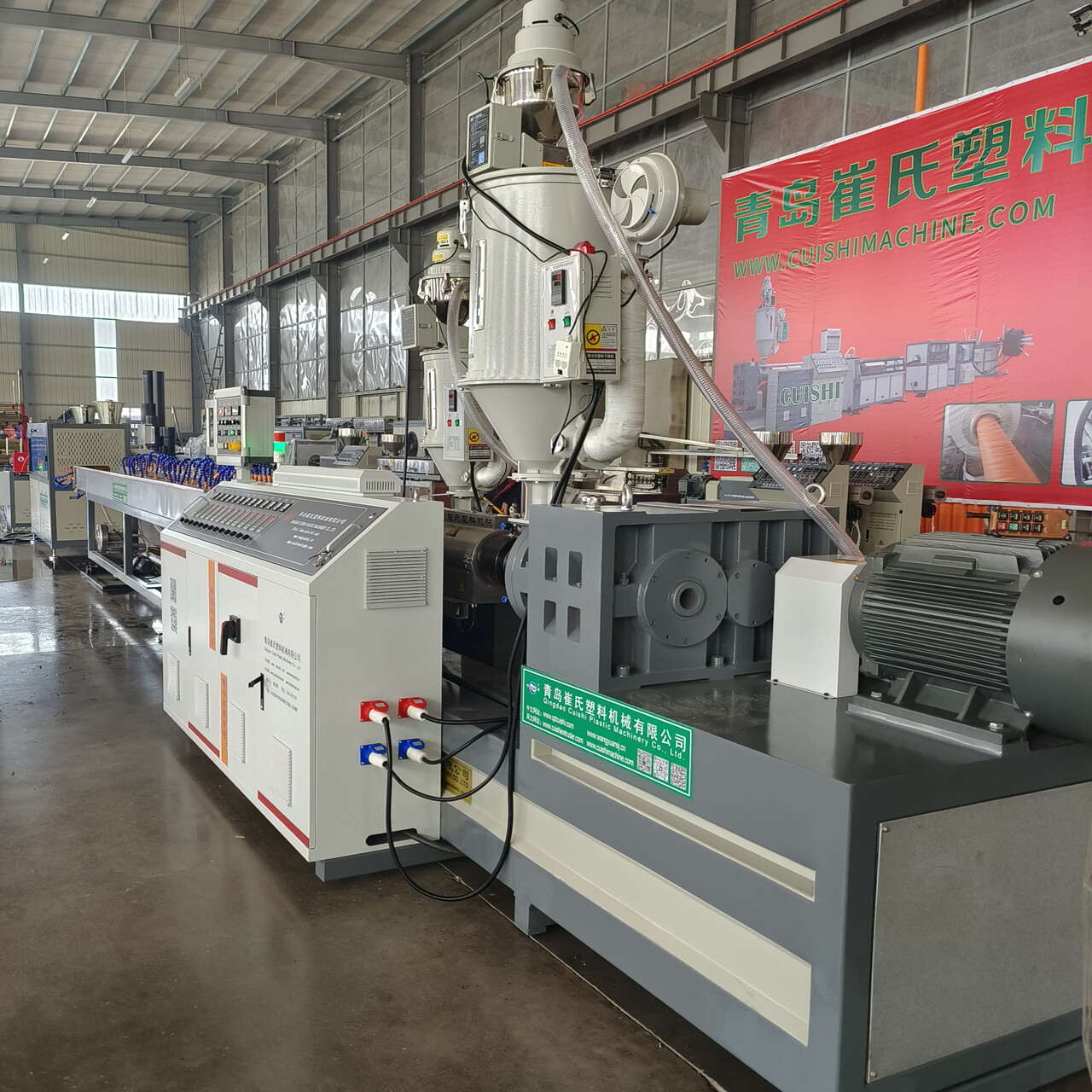
PVC and PE are two materials with significantly different thermal properties. Therefore, the core configurations of the PVC and PE pipe extrusion production lines, especially the design of the extruders and molds, are completely different.
1. Extrusion machine configuration
PE pipe material: Uses a single-screw extruder. The viscosity of PE material is greatly affected by shear heat. The single-screw design is simple and can provide a high rotational speed (shear rate), which is suitable for high-capacity and high-speed extrusion of PE materials.
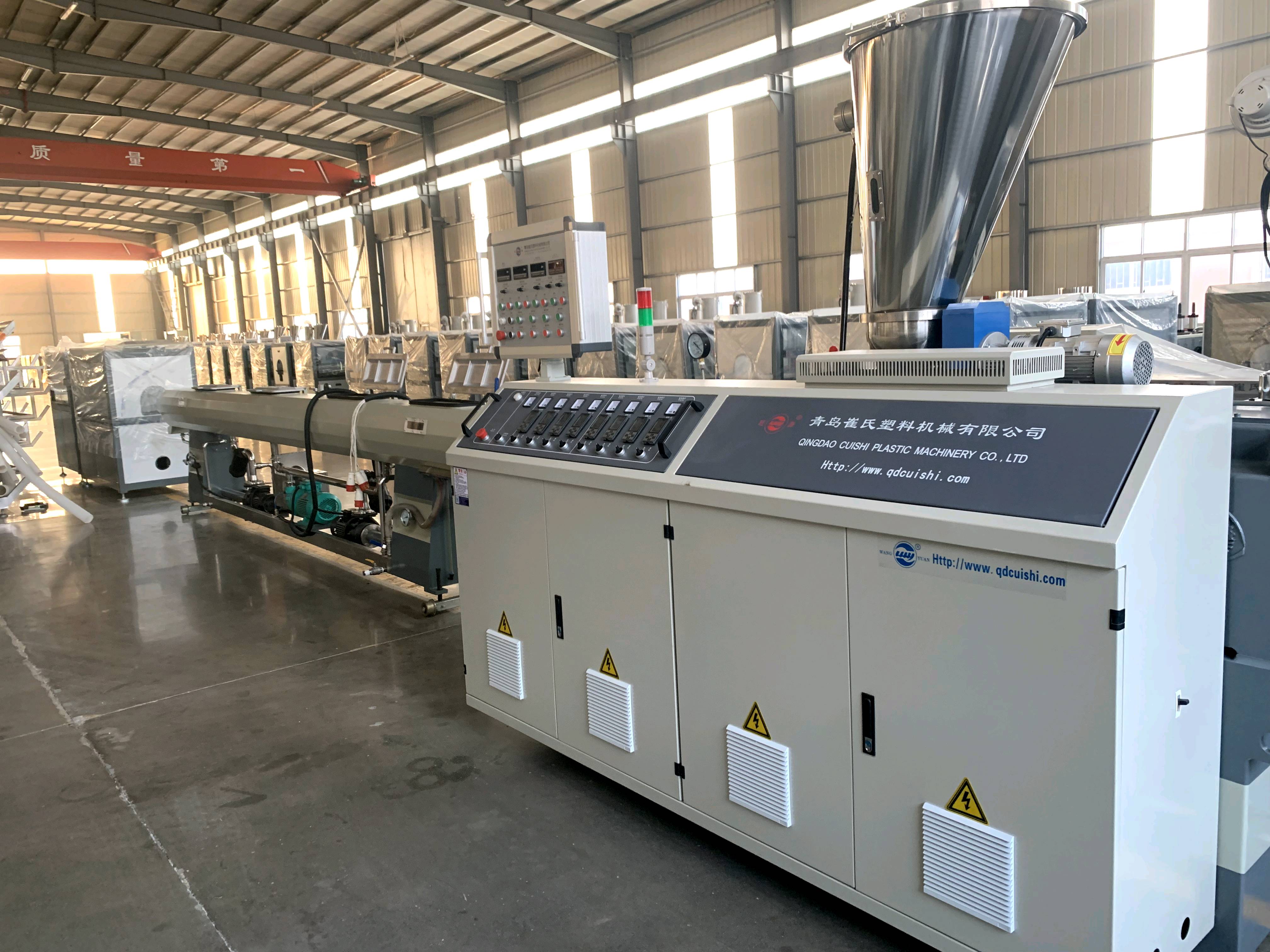
PVC pipe material: Uses a conical double-screw extruder (such as the SJZ series). PVC is a thermosensitive material and is prone to decomposition. The conical double-screw has the characteristics of forced conveying, short residence time, good self-cleaning, and low shear heat, which can effectively prevent PVC from decomposing and yellowing at high temperatures.
2. Molds and shaping
PE pipe material: Commonly uses basket-type or screw-type die heads, with long flow channels and high pressure, suitable for the production of large-diameter and thick-walled pipes.
PVC pipe material: In the production of conduit pipes, a one-out-four mold is commonly used, simultaneously extruding four small pipes, greatly increasing the production output per unit time.
3. Downstream equipment
PE pipe material: For thick-walled pipes, cutting machines mostly use planetary chipless cutting machines to ensure the flatness of the cutting edges of large-diameter pipes.
PVC conduit pipes: Mostly use high-speed chipless cutting or pneumatic cutting, matching their high-speed production rhythm.
Recommended products
 Single Wall Corrugated Pipe Production LineThe corrugated pipe produced by Single Wall Corrugated Pipe Production Line is commonly used in various applications such as drainage systems, cable protection, and agricultural irrigation.
 Double Wall Corrugated Pipe Production LineDouble Wall Corrugated Pipe Production Line is a type of manufacturing equipment used to produce double wall corrugated pipes. These pipes are commonly used in various applications such as drainage systems, sewage systems, cable protection, and telecommunications.
 PE Pipe Production LinePolymer, a chain of monomers is versatile which has led to the versatility of the plastic products. The horizon of the plastic products is broad. One of these versatile plastic products is a high density polyethylene pipe which delivers safe and clean water. These pipes with its numerous advantages has benefited the society with advantages such as chemical resistance, corrosion resistance, no toxicity, longer life cycle, better impact strength, light weight, lower installation costs, energy savings etc.
Polyethylene Pipes for Entrepreneurs 110-315mm PE Pipe Gas Water Machine Production LineThe center height of the whole production line equipment is 1100+-50mm to design and produce
We test 315mm pe pipe line with SDR9 well for our Russia customer PVC Foam Board Production LinePVC Foam Board Production Line can be customized according to customer needs
 TPV Profile Production LineTPV Profile Production Line is used for producting sealing strip of PVC TPU TPE plastic etc material ,features high output ,steady extrusion ,low power consuption.